
Cold weather riding separates fair-weather riders from year-round motorcyclists. Whether you’re commuting, touring, or just refusing to let winter steal your seat time, riding in cold or extreme cold demands the right gear and smart layering. Wind chill at highway speeds can turn a 40-degree day into something brutal fast, and in extreme cold, exposure isn’t just uncomfortable—it’s dangerous.
Here’s a breakdown of proven riding gear solutions for cold and extreme cold weather, from mild winter days to near-freezing and sub-freezing conditions.
1. The Foundation: Base Layers Matter More Than You Think
Your riding gear is only as good as what’s underneath it.
For cold weather, thermal base layers made from merino wool or high-quality synthetic materials are essential. Cotton is the enemy—it holds moisture and drains heat from your body.
For extreme cold:
-
Use expedition-weight base layers
-
Look for moisture-wicking and heat-retaining properties
-
A snug fit is better than loose—it traps warmth efficiently
A proper base layer keeps your core warm, which protects circulation to your hands and feet.
2. Mid-Layers: Trapping Heat Without Bulk
Mid-layers are where insulation happens.
For cold weather:
-
Fleece jackets
-
Lightweight insulated liners
-
Riding jackets with removable thermal liners
For extreme cold:
-
Down or synthetic insulated jackets designed to compress
-
Electric heated liners (more on that below)
The goal is warmth without restricting movement. Bulky layers reduce control and increase fatigue.
3. Outer Shells: Wind and Weather Protection Is Critical
Cold riding isn’t just about temperature—it’s about wind protection.
A quality cold-weather riding jacket should include:
-
Windproof construction
-
Waterproof or water-resistant materials
-
Adjustable cuffs, collar, and waist to block drafts
Textile touring jackets usually outperform leather in extreme cold because they seal better and allow layering. However, lined leather with a windproof membrane can work well in dry conditions.
For extreme cold, look for:
-
Storm flaps over zippers
-
High collars or neck gaiter compatibility
-
Integrated thermal liners or heated compatibility
4. Heated Gear: A Game Changer in Extreme Cold
When temperatures drop below 40°F—and especially below freezing—heated gear becomes the gold standard.
Common heated options include:
-
Heated jackets or liners
-
Heated gloves or glove liners
-
Heated pants
-
Heated socks or insoles
Modern heated gear runs off your bike’s electrical system or rechargeable batteries. A heated jacket liner paired with heated gloves can keep you comfortable in temperatures that would otherwise end the ride.
For long-distance or highway riding in extreme cold, heated gear isn’t a luxury—it’s survival gear.
5. Gloves: Cold Hands Kill Control
Hands take the brunt of cold exposure.
For cold weather:
-
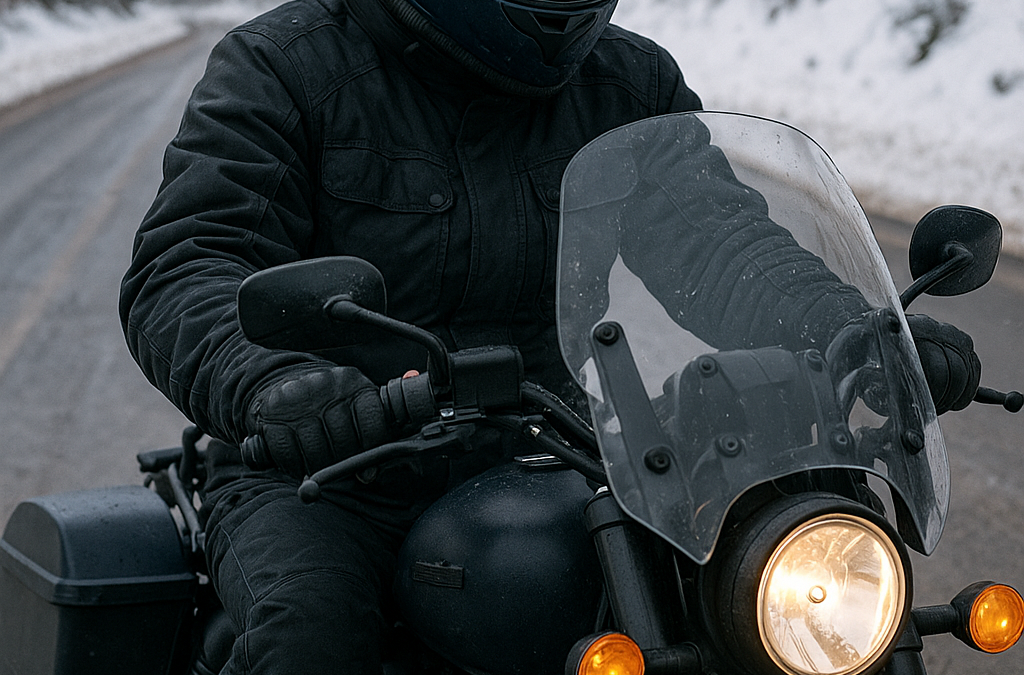
Insulated, windproof gloves
-
Gauntlet-style gloves that seal over jacket sleeves
For extreme cold:
-
Heated gloves or liners
-
Handlebar muffs or hand guards to block wind
-
Layered approach: thin liner + insulated glove
If your fingers go numb, braking and clutch control suffer. That’s a safety issue, not just discomfort.
6. Pants and Lower Body Protection
Riders often underestimate how much heat they lose through their legs.
Cold weather solutions:
-
Insulated riding pants
-
Textile pants with thermal liners
-
Windproof over-pants
Extreme cold:
-
Heated pants or liners
-
Snowmobile-style riding over-pants for touring riders
-
Full coverage with minimal airflow
Blocking wind on your thighs and knees makes a dramatic difference.
7. Boots and Socks: Keep the Blood Flowing
Cold feet end rides early.
Cold weather:
-
Insulated, waterproof boots
-
Wool or thermal socks
Extreme cold:
-
Heated socks or insoles
-
Boots rated for winter or touring use
-
Avoid tight boots that restrict circulation
Warm feet help maintain balance and reaction time.
8. Helmet, Neck, and Face Protection
A huge amount of heat escapes through your head and neck.
Key cold-weather additions:
-
Balaclavas or thermal face masks
-
Neck gaiters or wind collars
-
Breath deflectors to reduce fogging
For extreme cold:
-
Insulated balaclavas
-
Dual-pane or pinlock visors
-
Full coverage around the neck and chin
Wind sneaking down your collar will chill you faster than almost anything else.
Ride Smart, Ride Warm
Cold and extreme cold riding is absolutely doable—but only with the right setup. The key is layering, wind protection, and knowing when heated gear is necessary. Riding cold and distracted is dangerous. Riding warm keeps you alert, focused, and in control.
At Biker Law Blog, we believe riding is about freedom—but freedom doesn’t mean ignoring physics or safety. Gear up right, know your limits, and keep the rubber side down no matter what the temperature says.
If you’ve been injured in a motorcycle crash, especially one involving weather, road conditions, or another driver’s negligence, talk to a lawyer who rides and understands what you face on the road.
Ride safe. Stay warm.
Written by Norman Gregory Fernandez, California motorcycle accident attorney and founder of The Law Office of Norman Gregory Fernandez. With nearly 30 years of experience representing injured riders across California, Mr. Fernandez is also a lifelong motorcycle enthusiast who understands firsthand the challenges riders face in cold and extreme riding conditions. This article is provided for informational purposes only and does not constitute legal advice.