 Life in the wind
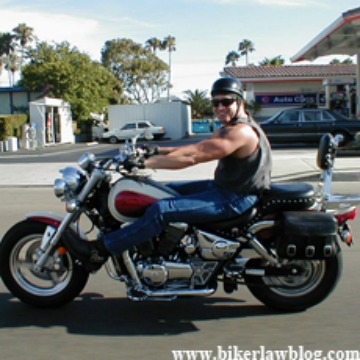
Being a long-time motorcycle rider, I am often asked by non-motorcycle riders why I ride.
I explain to them that there is nothing like taking my motorcycle out on the open road and “getting in the wind.” I try to explain to them that for me it’s like a spiritual and meditative experience. When I get on the open road my senses become hyper-alert, yet my mind becomes totally calm. Riding a motorcycle on the open road is unlike any other type of motor vehicle experience. You can “smell the smells,” see the sights, and feel the road. Only someone that has actually ridden a motorcycle will understand what I’m trying to say.
Riding on city streets is not the same as riding on the freeway or the open road, however, it is pleasurable nonetheless.
The experience of riding a motorcycle is hard to explain in words. There is nothing like sitting on top of a powerful machine on two wheels riding through the Arizona desert at 75 mph, or riding through the twisties in the Angeles Crest National Forest. It’s almost as if you and the motorcycle become one. The motorcycle responds to your every movement. When riding, I sometimes feel like I am flying. Again, it’s something that you have to experience for yourself to understand.
Motorcycle riders of all types, experience a bond and comradery that cagers do not have. No matter what type of motorcycle you ride, you feel a kinship to other motorcycle riders that you see on the road, I guess because you know that their experiencing the same thing that you are. It’s a great feeling riding down the road and having every other motorcycle that passes by shoot you what is called “the biker wave.” Bikers and motorcycle riders for the most part are the most friendliest, and trustworthy people that have ever met.
My Personal Experiences
The purpose of this article is to provide safety tips while riding your motorcycle and to share my personal experiences and recommendations on safety as a biker and a lawyer.
Having ridden motorcycles for many years, and also being a motorcycle lawyer, I have had many fantastic and outright scary experiences while riding on the road. Riding a motorcycle is not like driving a car. You are completely exposed to the elements, cars, and other motor vehicles, except for your clothes and your helmet if you use one.
There is an old biker saying; “it’s not a matter of if you’re going to go down, it’s a matter of when.”
I have gone down on a couple of occasions and it was not fun. As a matter of fact, it was downright painful. Luckily, I was not seriously injured.
Since I ride thousands of miles on my motorcycle each year, I have experienced many different type of scenarios on the open road, and on city streets. I have had many close calls which could have turned out to be disasters.
On one occasion when I went down, I was riding with a group of other motorcyclists in Palm Springs California. One of the other riders for unexplained reasons pulled ahead of me and proceeded to literally turn left right in front of me. I had no time to stop. I had two choices; I could have either T-boned the other rider which would have caused major injuries to both of us, or laid the bike down. I chose to lay the bike down. I thank God that I was not seriously injured and that there was only minor damage to the bike. You should’ve seen the look on the other riders face. I believe that the other rider had been drinking alcohol before the accident. By laying my bike down, I saved him and myself.
Nowadays, I absolutely refuse to ride alongside other motorcyclists who have been drinking. It’s not only illegal, but it’s downright dangerous. You never know what they’re going to do.
As I have said, I have had more than a few close calls. On one occasion while riding on Interstate 40 near Kingman Arizona, I pulled off the highway to get gas. I had my fiancé on the back of my motorcycle riding shotgun. If you have ever ridden through the Arizona desert at night, you’ll know that it’s pitch dark aside from the headlights on your motorcycle. To make a long story short, as I was turning left off the road to go to the gas station, I hit gravel in the road. Gravel, sand, and oil are a motorcycle rider‘s worst nightmare, because a motorcycle only has two wheels, and those wheels lose traction on gravel, sand, oil, water, and other slippery surfaces. Suffices to say, I was able to keep the motorcycle up while sliding through the gravel, and it was a very close call. We were lucky that we do not go down.
I had another very close call at a major biker rally in Las Vegas a couple of years back. First off, Las Vegas is probably not the best place in the world to have a biker rally. As everyone knows, Las Vegas is a 24-hour gambling and drinking city. There are drunks on the road 24 hours a day in Las Vegas. To make a long story short, I was riding on a side street off of the strip with four other bikes, and I had my fiancé as usual on the back of my motorcycle riding shotgun. I was leading the pack in the number one lane. (The number one lane is the lane closest to the center divider.) Literally out of nowhere, a drunk pulled out of a casino parking lot and turned left directly into my lane, right in front of me. There was nothing I could do but to lock up the back tire, and countersteer to the right in preparation to lay the bike down to avoid hitting the car. In what seemed like an act of God, the car accelerated very fast right in front of me, and I was able by the grace of God, to pull the bike back up before I laid it down. I was riding a very heavy motorcycle with a backseat passenger. The riders behind me told me that they could not believe that I was able to keep the bike up. Let me tell you, I am not even close to being the best motorcycle rider in the world, I consider myself to be just above average as a motorcycle rider. God was with us that night.
I will give one more example of a very close call that I was involved in; I was leading a pack of approximately 20 motorcycles on a run to Santa Barbara on the 101 freeway last year. We were riding in a side-by-side formation (also known as coffin formation) in the number one lane. The 101 freeway has basically no median to speak of in the area in which we were riding. We were rolling at approximately 70 mph. Out of nowhere, a mattress appeared directly in front of us. There was nowhere to go, and we had milliseconds to react. Luckily the guys I was riding with were all experienced motorcycle riders. Instinctively I immediately swerved to the left to avoid the mattress, while the rider next to me swerved to the right to avoid the mattress. Had there been a car next to the rider on the right, it would have been all over. The guys riding behind us observed our movements, and were able to avoid hitting the mattress. We were all lucky that day, and it sure got the adrenaline pumping.
There are many other examples I could give you of close calls that I’ve experienced or witnessed. You will notice in the above examples, that accidents and close calls were usually either the result of other motorcycle riders, cagers, bad road conditions, or obstacles in the road.
As a motorcycle lawyer I have seen the worst case scenarios where catastrophic injuries resulted to motorcycle riders in accidents. The purpose of this article is to try to make you aware of what’s out there, and to give you motorcycle safety tips based upon my first-hand experience as a motorcycle rider, and a motorcycle lawyer.
Inspect your Motorcycle
Before each riding, you should visually inspect your motorcycle to ensure that nothing is loose, and that there is no visible damage. Unlike in a car where you can simply pull off to the side of the road when you have a malfunction, on a motorcycle there in many cases are no second chances. A tire blowout could be catastrophic, or a loose bolt could result in disaster.
A simple cursory inspection of your motorcycle before each ride, could mean the difference between life and death.
If you find the loose bolts simply tighten them. If you find a nail in your tire, or visible damage to your tire, ensure that you get the problem fixed before you ride.
Do not take chances and ride your motorcycle when you know that there are problems. It’s not worth risking your life for.
Tire Pressure
Ensuring that you have proper tire pressure in the tires of your motorcycle is much more important than the tire pressure in your car. Since motorcycles only have two tires, there is no room for error.
Having proper tire pressure will not only ensure that your bike handles properly, but will also greatly increase the safety of your ride, especially in turns and in corners.
You should always inflate your tires to the recommended pressure that your motorcycle manufacturer recommends. If you have switched from the stock tires that came with your motorcycle, to another type of brand, you should inflate the tires to the recommended levels for that particular brand.
When in doubt, simply call your local motorcycle dealership, and ask the service department what the recommended tire pressure is for your motorcycle, with your brand of tires.
I recommend that you check your tire pressure, before each ride.
Another variable is climate change. An example is; let’s say that you have inflated your tires to 35 pounds in the summer. What do you think your tire pressure will be in the colder temperatures during the winter? If you answer the question by saying that your tire pressure would be less, you’re right. Colder weather decreases the tire pressure in your tires, whereas warmer weather increases the tire pressure in your tires.
Do not take a chance, check this tire pressure in your motorcycle tires regularly.
Helmets and Face Protection
This subject is probably one of the most controversial topics in the motorcycle world. There are those that demand the right not to wear a helmet, and there are those who always wear helmets. Many states have laws requiring you to wear a DOT helmet, and some states allow riders to choose as to whether they want to wear a helmet or not.
When I started riding motorcycles or I should say mini bikes at the age of five, I thank my father for putting a helmet on my head. To this day I will never forget that day in 1968 when I first got on a mini bike and promptly crashed into a drainage ditch. When I hit my head on the pavement in the crash there was no damage to my head whatsoever because I was wearing the helmet. Who knows where I would be right now if was not wearing a helmet at that time. Thank you Dad.
Later on in my adult life I rode probably hundreds of thousands of miles wearing no helmet all. When laws were enacted in the state of California which required you to wear a helmet, I wore a novelty beanie helmet because I had to, not because I wanted to. As you all know these beanie helmets are just for show and are worthless in an accident.
Later on, I picked up a full face helmet to wear in bad weather, or on long runs through the desert at night when bugs are particularly nasty. However, I still wore either a beanie helmet, or no helmet all depending upon the state I was riding in.
This all changed for me when I started handling motorcycle accident cases as a lawyer. I have seen the horrible and grotesque results of motorcycle accident injuries which involve riders with no helmets.
After one of my good friends went down on the San Bernardino Freeway and was seriously injured, I decided to switch to a full face helmet for protection.
After much inner contemplation, I decided that I would rather have a face, then look cool. If you have ever seen someone who has lost their face in a motorcycle accident you would probably change your mind to. For me, I made the conscious decision to go for safety because I was not willing to live with the ramifications of going down knowing that I could do something to protect myself.
I have found that my rides are much more pleasurable with a full face helmet as well. Not only are you mostly protected from the suns burning rays, but you are protected from wind, road debris, and bugs as well. It is much easier to put in a 400 mile day on your motorcycle wearing a full face helmet, than without. You can look to your left and right while riding at speed and not have any wind fatigue on your face or eyes whatsoever.
Have you ever hit a June Bug while riding at 80 mph? I have. At first, I thought I was shot between the eyes on the forehead, and thought for sure that I was going to pass out after a few seconds, but I did not pass out. I had one heck of a welt on my forehead, the bug goo was everywhere. Had I been wearing my full face helmet at the time, it would have been no big deal.
Another benefit of the full face helmet is skin protection, not just from sunburn which can cause cancer, but from the stretching of the skin that occurs at high speed from the wind. If you ride for many years like I have, the last thing you want is for your skin to be wrinkled and weathered like a prune. The full face helmet will protect your facial skin from the ravages of the wind.
One more benefit of the full face helmet is partial protection from the loud noise that is part of motorcycling. Even if you ride a crotch rocket or a quiet bike, average wind noise and traffic noise can be deafening. The full face will give you partial ear protection as well.
Therefore, as a biker, and a motorcycle lawyer, I highly recommend that you where a full face D.O.T. certified helmet for face and head protection at all times while riding a motorcycle.
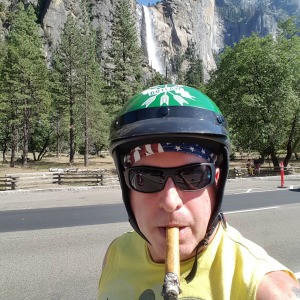
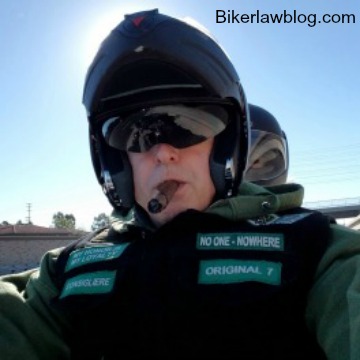
I personally where a full face helmet of the new flip up variety so that I can flip up the helmet when I want to have a cigarette, or stop for gas, without having to take it the helmet off.
I would not force my views upon anybody, these are just my personal recommendations. I firmly believe that every motorcycle rider should have the right to choose.
There are many valid arguments for not wearing helmets, and for wearing helmets. Whatever you decide to do on this issue, remember this; are you willing to lose your face or brain in a motorcycle accident?
Be smart, wear the best possible helmet while riding. It could save your life and your face, your brain, and your life!
Leathers and Riding Attire
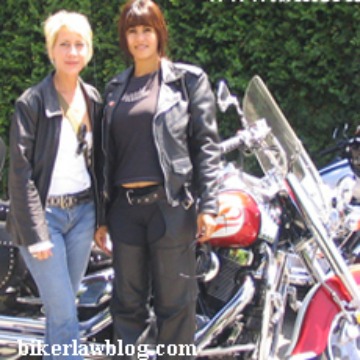
Leathers -Many people think that motorcycle riders wear leathers to look cool. Believe it or not, many motorcycle riders think this as well.
Long ago our motorcycle forefathers realized that leather not only offered protection from road rash in case of an accident, but it also provides a great amount of warmth and protection from the elements when riding in the wind and the cold.
Leather acts as a second skin. If you have an accident and you are wearing leathers, chances are that the leathers will take the brunt of the punishment.
If you have ever suffered road rash (road rash is the term used to describe what happens to your skin when it scrapes against the pavement in a motorcycle accident.) then you know full well what I am talking about.
Road rash usually results in permanent scarring, and in some cases requires skin grafts to correct. I have seen accidents where the skin and muscle tissue was rubbed all the way down to the bone.
I am as guilty as everyone else who has ridden without leathers. In the accident that I was in in Palm Springs (mentioned above) I was wearing a T-Shirt and Jeans. Yes I suffered from minor road rash on the side of my body where it hit the ground. Had I been wearing a leather jacket at the time, I probably would have just been a little sore.
I love to ride with just a t-shirt on in the hot California summer. I have even ridden with no shirt on.
However, for the same reasons I decided to start wearing a full face helmet, I now will not ride unless I am wearing a leather jacket. Yes, even in the hot California Summer.
It’s a matter of common sense. You need to ask yourself a simple question; am I willing to risk my skin and muscle just to be a bit more comfortable?
The good news is that many manufacturers now have leather jackets that are built for hot weather, and have ventilation slots or micro holes that let the air in while still protecting you. Some jackets even come with Kevlar inserts for the elbows, back, and shoulders for even more protection.
The choice is yours. I highly recommend always wearing a leather jacket while riding.
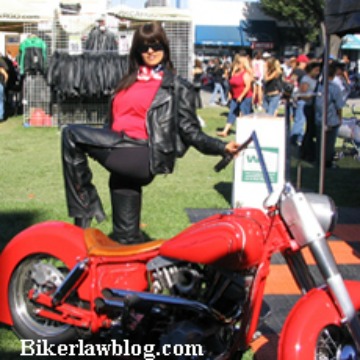
Leather Pants – For the same reason I recommend wearing a leather jacket while riding, I also highly recommend wearing leather pants or chaps while riding. It offers the best protection for your legs. The second best alternative is Denim Jeans. Do not be one of those fools you see riding around in shorts, that it unless you are willing to loose all of the skin and muscle off of your legs in case of a crash!
Leather Gloves – Human beings instinctively throw their hands out then they are falling in an attempt to brace their fall. This too happens in motorcycle accidents. You know what a paper cut feels like, try to imagine how bad you would feel if you had road rash on your hands? Does not sound appealing does it. Leather gloves serve the same purpose as a leather jacket, and leather pants, to protect your hands in case of an accident. They also serve another purpose, to protect you hands from the constant friction and fatigue that is involved in motorcycling generally.
As you know, on a motorcycle you are constantly using your right hand to throttle up and down, and to brake, and you are constantly using you left hand to pull the clutch in and out. Without gloves you hands can quickly feel raw, and fatigue sets in faster.
I use two sets of full leather gloves depending on what type of weather I am riding in. I use a non-insulated light leather pair of gloves for hot and fair weather riding, and I wear full 3m insulated water-proof “Gauntlets” in cold weather. Gauntlets are a style of glove that has a large leather piece that partially covers the forearm over your jacket sleeve. In cold weather that piece of leather really makes a difference.
Whatever type of leather glove you use, I highly recommend that you always wear a set of leather gloves that cover your entire hand while riding. There are gloves that also offer Kevlar protection in the knuckles and palm area of the hand.
You may have seen the half gloves that some people wear. They do work to a certain extent on the fatigue factor, (except for the clutch, and right front brake part.) However, they are pretty much useless for hand protection. I know, I used to wear them.
After my experience dealing with motorcycle accidents as a biker lawyer, I have switched to wearing full hand protection, and I recommend that you do too.
Motorcycle Riding Boots – A good pair of leather motorcycle riding boots is MANDATORY. I recommend obtaining boots specifically designed for motorcycle riding, and are of the type the covers your calf muscle. (Full size boots) There are many types of boots out there. I would recommend a boot that is waterproof, oil proof, with steel toes, and a squared front.
I have personally had many objects hit my boots while riding, such as rocks, road debris, etc. I suffered no damage to my feet because the boots protected me.
Furthermore, every time you come to a stop while riding your motorcycle your feet hit the ground. Sometimes your feet drag when coming to a stop or accelerating. You use your feet to back out of a parking space and/or to park. Your boots are a critical part of your necessary riding gear.
If you go down, your boots can protect you from having your foot amputated in an accident, and protect you from serious foot and ankle injuries. Every time I see someone riding a motorcycle in thongs, sandals, or tennis shoes, I would like to shout out to that person; “are you crazy?”
I have seen too many motorcycle accident scenes with tennis shoes laying in the road at the scene of the accident. A good motorcycle boot will stay on your foot in case of an accident; tennis shoes, sandals, and thongs will not.
Another huge advantage to having good motorcycle boots is protection from the weather. Your feet are exposed to the full elements of the weather in which you are riding. In cold weather you will thank god that you have a nice pair of warm boots to keep your feet happy. There is noting worse than having your feet go numb in cold weather because you are not wearing the proper riding boots.
Don’t skimp, go out and get a great pair of riding boots.
Goggles and Eye Protection
If you are a serious motorcycle rider you already know why you should wear goggles or eye protection while riding. If you are a newbie than I will tell you what; if you do not wear some type of eye protection while riding, you are in for a world of hurt and tears.
Eye protection is MANDATORY unless you are superman. Not only does eye protection protect you from the constant wind hitting your eyes, but it protects you from debris and bugs that will hit your eyes while on the road riding your motorcycle.
If you wear a full face helmet you should already have a face shield that will give you great eye protection, but what about those times that you need to flip the visor open while riding?
I always recommend that you wear Goggles if you are riding with an open face helmet or no helmet at all, because they provide the best protection for your eyes period. When I used to ride with no helmet, and/or the novelty helmet (mentioned above), I had two sets of goggles, one for day, and a clear set for night. They may not look as cool as sunglasses, but they work much better, and provide better protection against the wind, road dirt, and bugs. I know this from first hand experience.
With sunglasses or clear lens night glasses, the wind will still bother your eyes at high speed, or if you turn your head to the left or to the right to look at the view. If you are going real fast, a loose fitting pair of glasses will actually start riding up on your face. Furthermore road debris will still get into your eye. They do not provide full eye protection. You may look cool, but your eyes will take a beating, especially on long runs.
If you do wear a full face helmet, I recommend that you wear sunglasses underneath your helmet for day time riding, and clear lens glasses for night time riding. As you know on cold days or nights, your visor will fog up when you are at a stop, and you will need to flip your visor up and ride a bit to clear the fog from your visor. If you are not wearing glasses, your eyes will be unprotected during this time. Furthermore if you have to flip up your visor for any reason while riding, you will want to make sure that your eyes are protected while riding.
I have personally experienced very cold weather while riding with a full face helmet and had the bad experience of having to flip my visor open to get the fog out of the visor, while not having a pair of glasses on for secondary protection. It was not fun!
I recommend UV and Glare resistant lenses for whatever type of eye protection you use. Sun glare can temporarily blind a motorcycle rider, and could lead to a devastating crash. Night glare from oncoming headlights can have the same effect. I once almost drove my motorcycle straight into a curve because sun glare prevented me from seeing it. They do make special lenses with Sun Glare protection.
Hearing Protection
Unless you want to go deaf at an early age, you are going to want to get hearing protection for riding, even if you have a quiet bike. Before riding with ear plugs, I would find myself hearing ringing in my ears for hours after rides, and I would notice that I could not hear as well. I would also get headaches. The condition worsened after time. I realized that I was actually loosing my hearing due to riding without protection.
I am not a hearing specialist or a decibel level engineer, I am a biker and a lawyer. As you all know the wind noise alone while riding at speed is very loud, even if you have a quiet bike.
In regular city traffic the sound of big rig trucks and cars coupled with the wind noise is flat out deafening.
You do not have to be a rocket scientist to realize that riding without hearing protection is probably not a good idea, unless you look forward to wearing hearing aids when you get old, or learning sign language!
You can get custom fitted ear plugs made to fit your ear, or you can buy the cheap foam hearing protectors from any drug store. Either way, I highly recommend that you use some type of ear plug while riding to protect your hearing.
Road Conditions (Beware)
Always be cautious of the road conditions in which you ride. Unlike in a car, the motorcyclist only has two wheels and is at the mercy of the road. I have personally almost crashed due to gravel in the road, and have handled motorcycle accident cases where bad road conditions were the sole cause of the crash. I have personally witnessed motorcycle riders go down due to bad road conditions.
Look out for pot holes, gravel, rocks and debris in the road, water, black ice, and other hazards which could ruin your day. If you see a sign that warns of Black Ice, slow down, way down! If you have ever hit a patch of black ice in your car, you know that you lose complete control of the steering while going though the ice, and that is with two wheels doing the steering in a car. You can imagine the horror of hitting a patch of black ice while on a motorcycle with only one wheel for steering.
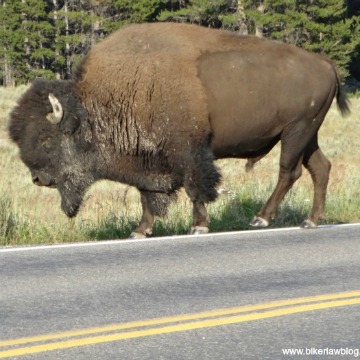
In certain parts of the Country Deer and Moose are a major cause accidents and death amongst motorcyclist. These animals are amazing. They will run like heck when you are hunting them, but they will run right into the path of your motorcycle, or simply stare at you in the middle of your lane as you approach them on a motorcycle, especially at night.
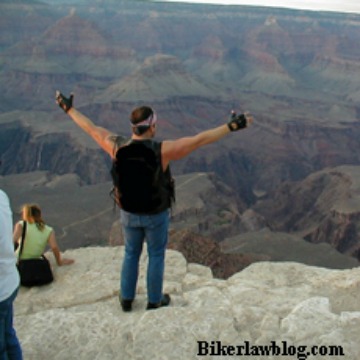
They are a real danger. I was once riding from the south Part of the Grand Canyon at night on the only major road out of the park. I observed the Deer and Moose warning signs but did not really give them a second thought until I actually saw one standing by the side of the road. I slowed down after I saw the deer. While continuing to ride along I could actually see the glowing eyes of the deer on the side of the road peering at me as I rode by. Watch out for Deer and Moose.
There are Deer repealing devices on the market that are supposed to scare these animals away. I have no clue as to whether they work or not.
Riding in the Rain – I personally will not ride motorcycles in the rain unless I absolutely have to! It is flat out dangerous and not recommended under any circumstances. Even slow speed turns in the rain can cause your rear tire to slide out from under you and cause an accident. At high speed the hydroplaning (water between your tire and road) is even worse. Furthermore if it has not rained in your area for a while, the rain will bring up the oil on the road that has built up during the dry season and cause the road to be even slipperier.
I have ridden through thunderstorms in the deserts of Arizona, downpours and hail in San Francisco, massive downpours in Durango Colorado, and bad weather all over the country. I always recommend that you get off the road as quickly as possible and wait for the Storm to pass. If this is not possible, slow down, and be very careful in turns or curves. Do not make any sudden movements if you are riding in the rain.
Do not let your friends or peers pressure you into riding in conditions which you know are not safe. It’s better to go home safe and unhurt than spend a month in intensive care at the hospital, or an eternity in the grave just to prove to your friends that you have to guts to ride in bad weather conditions!
Big Rig Trucks / Sand and Trash Haulers – As you probably already know, riding behind a Sand and Trash Big Rig is not fun, especially if you are not wearing a jacket or full face helmet. These types of trucks spew out sand, grit, and yes, trash. It can not only be a painful experience, but if the sand gets into your eyes it gets even worse, especially if you are riding at 65mph and cannot open your eyes. I recommend that you do not ride behind these types of trucks because it is not safe. I have seen metal shards fly off of trash haulers. One narrowly missed my head.
Take my hundreds of thousands of miles of riding experience to heart. I have experienced these conditions, and I am now passing it on to you. Get past these pest as quickly as possible.
Beware of anything on the road – As I stated above, we were riding on the freeway about 1.5 seconds behind a car in front of us when a mattress appeared on the road. On that day I do not believe that we left enough of a safe distance between the car and our pack to maneuver around any road debris that popped up under the car. We were lucky.
Always keep your eyes open for any hazards, and always keep a safe distance between you and a rider or car in front of you. I consider a safe distance to be at least 3 seconds or more. The more distance, the better.
DO NOT TAILGATE, especially on a motorcycle.
Other Vehicles “The Cager”
Ahh, the ubiquitous cager. (persons who are driving in cars or other motor vehicles) The cager is the most dangerous “thing” to a motorcycle rider. The vast majority of motorcycle accidents are caused by negligent cagers.
It’s usually the same story; “the cager did not see the motorcycle.”
I feel that most motorcycle accidents involving a car versus motorcycle, are caused by the person driving the car displaying a wanton and reckless disregard for the rights of the motorcycle rider to be on the road. In some cases cagers intentionally swerve towards motorcycle riders for whatever sick reason they have.
The cager is a dangerous animal. When you’re riding your motorcycle you must act as though the cager does not see you, or know that you’re there. Do everything that you can to avoid riding directly next to a cager because you never know if they are going to switch lanes right into you.
The cager is unpredictable and dangerous. Cars and Trucks are much more bigger than your motorcycle. No matter how big and tough you are, a 5 foot grandma is much tougher than you, when you are on a motorcycle and she is in a car.
Most accident cases involving cages occur in street intersections, and usually involve the cager making a left hand turn right in front of you. Always keep your headlights on, even during the day. You want to do everything possible to MAKE the cager see you. When you approach an intersection and you see that a cager is anxiously waiting to make a left turn in front of you, do not be afraid to sound your horn or flick on your high beams. I do this all of the time. Its better to error on the side of caution than end up in the emergency room or in the morgue.
When approaching an intersection anticipate that the cager will turn in front of you and visually plan in your head what you will do just in case they actually do. Motorcycle riders must use defensive and offensive riding to protect themselves against cagers. I cannot even count the number of times that a cager has made an unsafe turn in front of me.
Whatever you do, always approach every intersection with caution. You should not be riding so fast that you cannot survey the cross streets for persons who may run a stop sign or a red light. I always look at the cross streets when approaching an intersection for cagers who look like they are about to blow through the red light.
Many motorcyclist are injured when their rear ended at intersections by cagers. As a matter of fact many cars rear ended as well.
I always recommend that when you come to a stop at an intersection that you keep your motorcycle in gear just in case you need to start rolling again quickly if you notice in your rear view mirror that you might be rear-ended.
Always survey your rearview mirrors while stopped at an intersection, for a Cager that looks like he is not going to stop. Do not be afraid to move your motorcycle out of the way. While stopped, survey your surroundings and try to formulate in your mind an escape route just in case you have to take evasive maneuvers.
This may seem like a lot to take in, however after you have ridden your motorcycle for a time, it will become like second nature. Motorcycle riders must be vigilant to protect their own safety.
With respect to lane splitting, (riding in between cars who are in two different lanes which is legal in the state of California) do not go too fast. The bottom line is that although lane splitting is legal in the state of California, it is flat out dangerous, and requires vigorous concentration to be successful. I cannot tell you how many times my backseat rider freaked out while I was lane splitting, even to the point of screening for me to stop.
There is not much room to maneuver in between two cars while lane splitting. Furthermore, there is even less room to maneuver with all of the big SUVs on the road nowadays. Big rig trucks, buses, and campers further decrease the room you have to maneuver. You must anticipate that the cars will not see you when you are lane splitting. You must anticipate that any time a car can either swerve towards the lane that you are splitting, or even switch lanes into your path. You must not be going so fast as to not be able to stop in case any of the above occurs.
I do not recommend lane splitting for new riders, or for persons who have not mastered their motorcycles. I have ridden for many years, and often times while lane splitting come to within 1 inch of a car’s rear view mirror. I have even clipped a couple of rear view mirrors while lane splitting.
One wrong move in either direction can ruin your day. Another obstacle to worry about while lane splitting are the lane dividers themselves. In California there are different types of lane dividers in between lanes. The most common divider are round raised reflective bumps, that you will need to ride over while lane splitting. Try to stay off of these bumps as much as possible. The bumps will not only give you a very bumpy ride, but they can also cause you to move your front tire just enough to cause you to hit a car. Lane splitting takes a lot of practice to master, and even then it’s not completely save.
I lane split when the traffic is bad so I am not going to recommend that you don’t Lane split. My only recommendation is that if you are going to Lane split be very careful. Lane splitting requires 100% concentration on the part of a motorcycle rider.
Riding in a Pack
Oftentimes you may want a ride with your friends, clubs, or other motorcycle riders in a pack. Unless you know the person so you’re riding with, and their habits, you must be very careful. Even if you do know your friends riding habits, you must be careful.
I am not going to go into a dissertation on biker hand singles for riding in a pack in this article. There are many places on the Internet that will show you all of the recognized hand signals used by motorcyclists in a pack. When you ride in a pack make sure you use the hand signals at all times.
Unlike riding by yourself, pack riding can be extremely dangerous because you have motorcycle riders in front of you and to the rear of you, and often times safe distances are not observed. Pack riding involves placing your trust in all of the other motorcyclist in the pack. One wrong move by any rider in the pack can literally take out the whole pack.
Many of you have probably been on poker runs, or at biker events, where you ride with a whole bunch of motorcycle riders that you do not know. Although it’s fun to ride with a group of other riders, you must assume that the other riders are either amateurs, or weekend riders, unless you know them.
I have personally witnessed many bike on bike rear-ender accidents, and crashes at biker events. I have also witnessed riders swerve into other riders, and take them out. I have also witnessed riders take turns too wide or fast and crash their motorcycles, or be hit by incoming cars. When I am running with a group of strangers I always like to stay in the back and at a safe distance, just in case.
I was once riding with a gal who had her own motorcycle. We made a left-hand turn from one major street to another. Since I was in the left position, I was leading the ride. After making the left turn, I then put on my right hand blinker and gave a hand signal that I intended to pull into a bank parking lot on the right hand side. Instead of watching my movements, and accelerating slowly through the turn, the gal accelerated way to quickly and did not give herself time to react. When she saw my signal, she panicked, locked up her brakes, and crashed her motorcycle. This accident would not have happened had the gal kept a proper distance, and not accelerated like a mad woman out of the turn. Had the gal not crashed her motorcycle, she would’ve most certainly crashed into me.
There are three types of pack formations: (1) Side-by-side; (2) Staggered; (3) Free-for-all. I highly recommend that all pack rides be done in a staggered formation, because it is the safest formation for pack riding.
A staggered formation is where one person is on the left part of the lane, then the person behind him is riding about 1 or 2 seconds behind on the right part of the lane, then the person behind him is riding 1 or 2 seconds behind him on the left part of the lane and so on. There are many websites which give examples of these formations.
The staggered formation should only be done when it is safe. If your pack gets onto a small country road or in mountain twisties, the pack should switch to a single file formation. That is one person rides behind the other and so on.
My opinion is that the two safest places to be on a pack ride is either in the back or in the front! They both have disadvantages but the disadvantages are substantially outweighed by the dangers of actually being in the middle of the pack.
If you are in the front of the pack you will be able to see all road obstacles and debris in front of you, so you will be able to avoid them. However, if you have to brake hard, there is a very good chance that the riders behind you will rear end you. I have lead many pack rides. There is nothing worse than the sound of tires screeching behind you when you slow down or stop!
If you are in the back, you can keep a very safe distance from the rest of the pack. If there is an accident you should be able to stop in time before you hit your fellow riders. The bad part about being in the back is that you cannot see the road conditions in the front of you. If the pack is doing proper hand signals, they should be pointing to rocks and other debris on the road before you get to it, but nonetheless you will not see it until you are right up on it unless you are keeping a good safety buffer between you and the pack. Another disadvantage to being in the back is that if you are not keeping a safe distance, and a rider goes down in front of you, you may not have enough time to avoid the rider, and you may crash into him or them. One other disadvantage to being in the back is that you will be eating everyone else’s exhaust fumes, hearing their loud exhaust, and eating oil if someone has a leak. However, a good aspect about being in the back is that everyone else should clear the bugs and air debris before you get to them.
I prefer to ride in the back at a safe distance. I have seen too many rear ender bike on bike accidents. For me the back is best. You will have to choose what is best for you.
Pack rides can be awesome, and they can be deadly. Exercise caution at all times!
Train your Passenger
Yes, a passenger needs to learn how to be a passenger on a motorcycle. I have experienced many instances where passengers on the back of my bike have almost caused me to go down, dangerously distracted me on rides, and have damaged my bike.
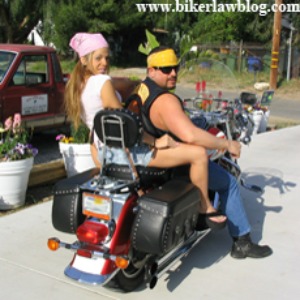
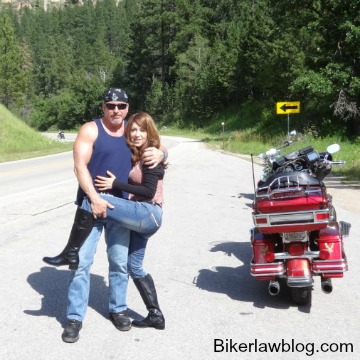
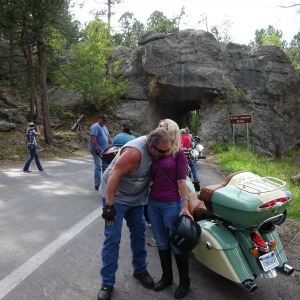
Get On and Off the Bike and Foot Placement – The first thing that you need to teach a passenger is how to get on and off the bike, and where they should put their feet. I usually help my female passengers (my fiancé for the past 5 years) to get on and off the bike by lifting their leg over the bike, because I hate it when they kick your tank or chrome and mess up your detail work or scratch your paint.
Do not assume that a passenger knows how to get on and off the bike, or where to place their feet just because they appear to be biker gals or guys, or brag about how many times they have ridden on the back of bikes. I know from first hand experience that many times they have no clue and are just trying to impress you.
Do Not Remove Feet from Pegs – The second thing you need to stress to your passengers before you ride is that they should not remove their feet from the pegs or floorboards under any circumstances until you stop, put your kickstand down, and tell them to get off. My fiance and I have been riding together for so long now that it is automatic.
On our first date she put her long heeled boots on my new Slash Cut pipes and proceeded to ruin them. The boots melted all over my pipes.
The main reason that the passenger needs to keep their feet on the pegs or floorboards is for safety. Your passenger could suffer serious injuries to their feet if they put their feet down before you park the bike or if they try to get off while you are still rolling. It could actually cause you to drop the bike.
Proper Riding Attire for Passengers – It is your responsibility to ensure that your passenger is wearing the proper motorcycle riding attire and helmet, (discussed above) not only for their safety, but for you as well. If you get into an accident that is your fault, you are legally liable to the passenger for their injuries. If they are not wearing proper attire, you will be legally responsible for their damages.
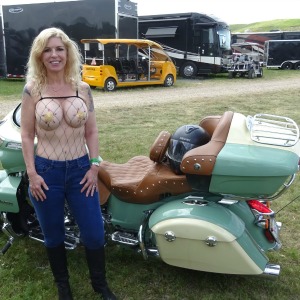
I know it looks real nice to see gals on the back of Harley Davidson’s or Sports bikes, with little halter tops on, and skinny minnie shorts, however you need to think about what will happen to them in case of an accident. Is it more important to look cool or protect your passenger?
Do the right thing, make sure your backseat passenger has proper riding gear on.
How to be a Motorcycle Passenger – Now that you have taught your passengers the basics, you now need to teach them how to be a passenger on a motorcycle.
There are 3 types of passengers: (1) Naturals- they have no fear and seem to automatically know what to do, (2) Scardie Cats – no matter how many times they ride, they cannot get over the fear of riding on the back of a bike, and (3) Normies – they are afraid at first, but they eventually lose their fear except under certain circumstances.
My fiancé is a normie. She freaks out when I lane split, and no matter what I do, she freaks out when I lane split.
You need to teach your passenger to lean back into your sissy bar or backrest, and relax. There is nothing worse than a passenger who has a death grip on you while you are trying to ride. They may feel safe, but it prevents you from being able to operate the motorcycle safely.
Obviously if you have no backrest or sissy bar, than your passenger should scoot up as close to you as possible and hold on to your waist.
I am against taking a passenger on a motorcycle unless you have a sissy bar or backrest on the bike because of the danger that they will fall off if you accelerate too fast, or they lose their grip and fall off. I have seen it happen to other riders, it is a real danger.
Some are of the opinion that it is safer to not have a backrest or sissy bar on the back so that their passengers can fall off in case of an accident.
This is a matter of personal opinion and a subject of much debate. I recommend not taking a passenger on your bike unless you have a backrest or a sissy bar. It may not look as cool on your bike, but at least your passenger will have some protection from falling off of the back of the motorcycle. I feel that the chances of a passenger falling off of the back of your bike are greater than you getting into an accident.
You will need to explain to your passenger “before the ride,” that you will be accelerating, decelerating, shifting gears, and doing turns. You need to explain that on curves and turns that the bike will lean in whatever direction you are going, and that this is normal.
You need to explain to your passenger to not fight against the lean of the bike, and that they should lean into the turn with you. It is very important for balancing the motorcycle. Explain to them that if they shift their body weight away from the lean that it could not only make your ride much more difficult, it could also cause you to crash.
Another thing you will need to explain to your passenger is not to make sudden moves or shifts of the butt or body weight on the back of the bike, because this too can cause you to go out of control or crash the bike, especially at slow speeds or at stops.
There is nothing worse than holding up a 1000 plus pound bike at a stop light, not including rider and passenger weight, only to have your passenger jerk or shift their butt around. I have seen friends drop their bikes this way.
Rider / Passenger Communications on the Road – Although there are companies that make rider/passenger communications devices with in helmet microphones and speakers to allow you to talk while riding, most motorcycle riders do not have this kind of setup. I have tried this setup myself, but my bike is so loud, especially at highway speeds, it only worked at very slow speeds with low wind noise. It did not work for me and I removed it after our first 800 mile run with the system.
At highway speeds it will be virtually impossible to speak to your passenger and visa versa. Yelling in most cases does not work either and can be dangerous.
I highly recommend that you work out what I call a tapping system for communications. It’s real simple; let’s say your passenger needs to go to the bathroom. Work out a system where she will tap you 2 times in your shoulder. You will then give a thumbs up with your left hand to signal that you understand and will pull over at the next gas station. Let’s say that the passenger needs to stop immediately because they have dropped something, noticed something wrong with the bike, or for any other reason. Work out a system where the passenger will tap you on your shoulder 5 times. You give the thumbs up with your left hand to signal that you understand, and then pull over at the first “safe” place.
You get the idea. Part of the pleasure of riding a motorcycle with a passenger is “not talking” and just taking in the sights, smells, and sounds, in intimate closeness. With a tapping system you can communicate important things without risking turning your head to try to yell at each other through the wind.
Small Children as Passengers – I do not recommend taking small children on your motorcycle as passengers. I have seen other bikers do this on many occasions and I could only think to myself; what if that idiot crashes? What is even more upsetting is seeing somebody taking their small child for a ride with no leathers or boots.
What is the age at which I would recommend taking a child or a teen on a ride? I started taking my daughter out when she was 16 wearing full motorcycle attire.
I will not make any recommendations with regard to this issue, except to say that if a child cannot reach the back pegs or put their arms completely around you, than I doubt that they are big enough to ride as a passenger.
Take a Break, Fatigue and Other Considerations
Riding a motorcycle is fun, exhilarating, exciting, and downright tiring! Especially if you are the one operating the bike.
Unlike driving a car; riding a motorcycle requires physical excursion, and intense concentration. You will tire much more quickly on a motorcycle, than in a car, even though you may not realize it at the time.
I personally have taken many long rides. I am not sure which one was the longest single day ride without sleep, but I have driven from Los Angeles to Lake Tahoe, and back down to Reno, while taking the time in the middle of the run, to ride back and forth through the Yosemite valley. It took around 19 hours without sleep and I was ready to drop at the end.
I have taken many single day rides (riding with no sleep) that were 600 mile plus.
The key to enjoying your run and being safe, is to take frequent breaks. Luckily on most motorcycles you must take a break about every 150 miles or so because of fuel capacity. However, when you get to a point where your butt is going numb, your hands are going numb due to the cold, your legs are aching, or you feel yourself falling asleep. It’s time to pull over and take a break.
You know how dangerous it is to ride in a car while being tired and sleepy; on a motorcycle there are no second chances. You snooze, you literally lose, possibly your life.
Part of the fun of motorcycling is taking a break after rolling for 120 miles or so, especially if you smoke. You should not be in such a rush to get somewhere that you throw safety to the wind.
Wherever you are going will be there when you get there. The point is that you should take frequent breaks on rides to rejuvenate you body and your senses.
The great thing about being a biker is that you usually meet other bikers when you stop to take breaks. I have met many interesting people during what I call “Pit Stops.” The ride will be much more enjoyable and safer if you enjoy your ride rather than rush your ride.
Maybe one day our paths will cross in the wind. Until then stay safe.
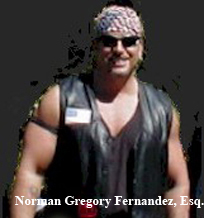
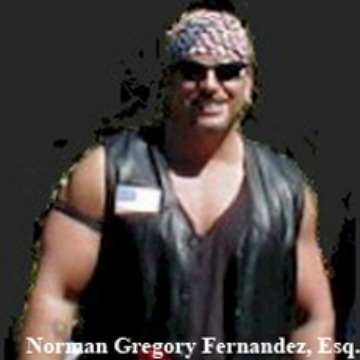
“This article was originally written and published by Norman Gregory Fernandez, Esq. on May 20, 2006.” It may be updated from time to time.
Copyright 2006-2016, California Motorcycle Accident Attorney Norman Gregory Fernandez, Esq., All Rights Reserved.
Disclaimer
This article is not meant as legal advice and should therefore not be construed as legal advice, therefore no attorney/client relationship is expressly or impliedly created by the publication of this article. The Safety Tips and opinions offered in the article are that of its Author Norman Gregory Fernandez, Esq., alone. The author shall assume no legal liability for the contents of this article. These Safety tips are provided for educational purposes only. This article may not be republished in any form without the express written consent of it’s author.
For a free telephone consultation on your motor
cycle injury or other personal injury case call us now at (800) 816-1529, Ext. 1., or you may submit your case through our online legal form for evaluation by clicking here now.
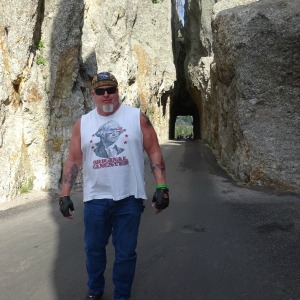



































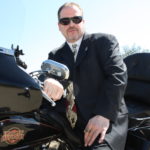 Welcome, my name is